Researcher · PhD in Applied Psychology
Occupational health through an intersectional lens
Portugal · Brazil · Europe
About the Research
My research begins with a simple observation: work is not experienced the same way by everyone. The same organizational environment that feels routine to some workers can become a source of chronic stress, exclusion, or erasure for others.
This asymmetry — structured by gender, sexual orientation, migration status, and occupational class — is the thread that runs through everything I do. I work at the intersection of occupational psychology and critical social science, where quantitative rigor meets the lived complexity of working lives.
From the factory floors of industrial Portugal to the invisible labor of LGBTQIA+ workers navigating hostile environments, my goal is to make visible what organizational metrics tend to obscure.
Psychosocial risk is not distributed. It is allocated — and the pattern is never random.
Research Focus
Applying the Job Demands-Resources model and COPSOQ instruments to understand how work shapes health across industrial and service sectors in Portugal and beyond.
Examining how sex, migration status, and occupational class combine to produce differential exposure to psychosocial hazards — operationalized through I-MAIHDA, the analytical core of the IOH Framework.
Investigating the psychosocial burdens specific to LGBTQIA+ workers — from workplace climate to occupational trajectories — with particular focus on the Portuguese and Brazilian contexts.
Current Work
Postdoctoral project examining invisible mental load, work-family conflict, and psychological health among working women, integrating I-MAIHDA with a critical reading of EU Directive 2019/1158 on work-life balance.
Original theoretical and methodological framework for modeling how psychosocial risk at work is structurally allocated through configurations of sex, migration status, and occupational class.
Conference presentations, publications, and research events
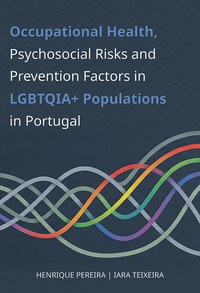
Henrique Pereira & Iara Teixeira
A comprehensive examination of the psychosocial risk landscape faced by LGBTQIA+ workers in Portugal, combining quantitative survey data with intersectional frameworks. Based on a funded research fellowship (RESTART 2023.00018.RESTART).
↗ View publicationIara Teixeira
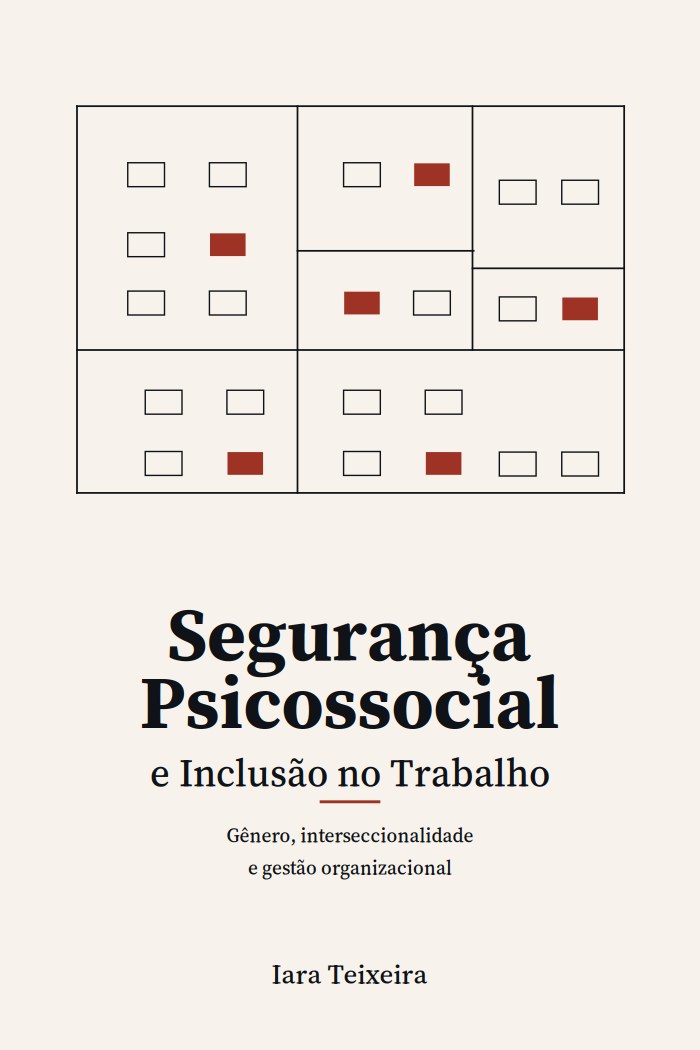
Theoretical and applied examination of psychosocial safety in organizational contexts, foregrounding the intersectional dimensions of gender and identity in workplace inclusion and management practice.
Forthcoming — PDF available upon publicationIara Teixeira, Felipe Alckmin-Carvalho e Guilherme Welter Wendt
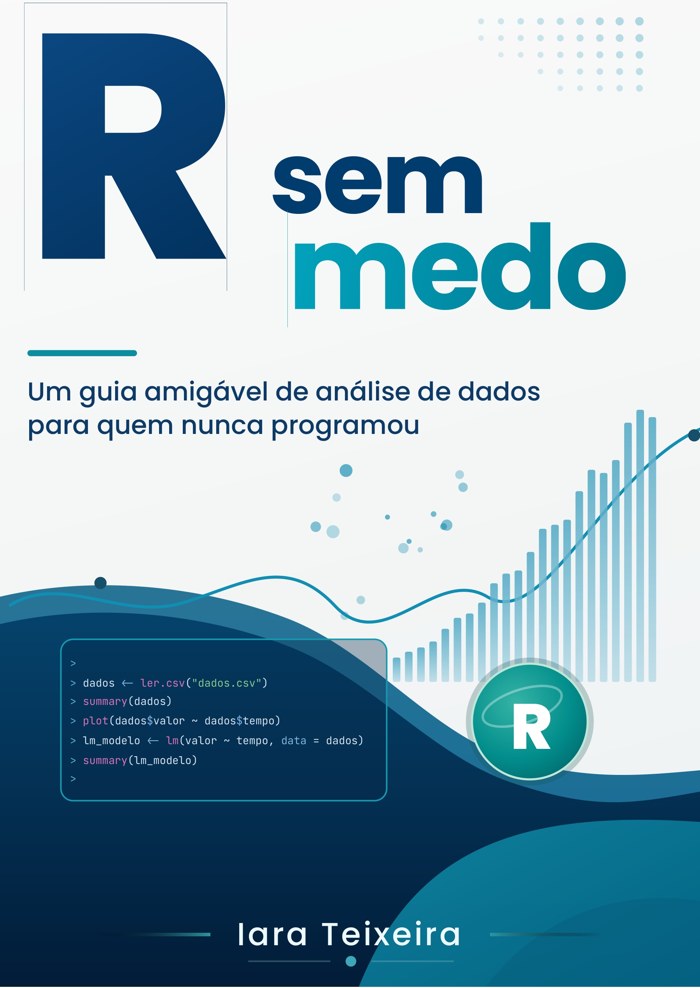
An accessible practical guide to data analysis in R for researchers and students without a programming background. Step-by-step, reader-friendly approach covering descriptive statistics, visualization, and inferential modeling.
Forthcoming — PDF available upon publicationOccupational Health × Intersectionality
Key publications at the intersection of psychosocial risk and social stratification
International Journal of Transgender Health
"You Always Have to Prove Yourself": Trans Women's Experiences in the Portuguese Labor Market
Teixeira, I., Alckmin-Carvalho, F., & Pereira, H. · ↗ DOI
Behavioral Sciences 15(9) · Open access
"We Help Each Other Through It": Community Support and Labor Experiences Among Brazilian Immigrants in Portugal
Teixeira, I., Silva, P., Alckmin-Carvalho, F., Wendt, G.W., & Pereira, H. · ↗ DOI
Revista Portuguesa de Investigação Comportamental e Social · Open access
LGBTQIA+ Inclusive Workplace Climate in Portugal: Sexual Minorities Employees' Perspectives
Teixeira, I., Alckmin-Carvalho, F., & Pereira, H. · ↗ DOI
Behavioral Sciences 15(2) · Open access
Psychosocial Determinants of Occupational Health Through the Lenses of Gender Identity and Sexual Orientation
Oliveira, A., Teixeira, I., Alckmin-Carvalho, F., & Pereira, H. · ↗ DOI
Revista Brasileira de Medicina do Trabalho · Open access
Psychosocial Risks at Work: Integrative Review and Conceptual Perspectives
Teixeira, I., Silva, I.S., & Cadime, I.M.D. · ↗ DOI
Theoretical and Applied Ergonomics · Open access
Direct and Indirect Effects of Organizational Support on Stress Levels: A Study Within the Car Industry
Teixeira, I.N., Wendt, G.W., Alckmin-Carvalho, F., & Freire, S.E.A. · ↗ DOI
PLOS Global Public Health · Open access
Validation of the Copenhagen Psychosocial Questionnaire III for Portugal
Cotrim, T.P., et al. (including Teixeira, I.) · ↗ DOI
Healthcare 13(23) · Open access
The Role of Ethnic Origin on Psychosocial Health in Portugal: An Examination of Risk and Protective Factors
Ledo, J., Cruz, M., Pereira, H., Teixeira, I., et al. · ↗ DOI
Postdoctoral project integrating I-MAIHDA methodology (30 social strata), serial mediation modeling (mental load → work-family conflict → psychological distress), and a critical engagement with EU Directive 2019/1158. Supervised by Henrique Pereira and Felipe Alckmin-Carvalho.
Original theoretical framework for modeling intersectional psychosocial risk allocation at work. Peer review in progress.
Existing occupational health frameworks — including the influential Job Demands-Resources model — treat psychosocial risk as something workers experience as individuals. But work is not an individual experience. It is organized by social hierarchies that determine, before any individual variation, who gets which demands, who gets which resources, and who is protected when things go wrong. The IOH Framework was developed to make that structure visible and measurable.
The IOH Framework proposes that psychosocial risk at work is allocated — not randomly, but through intersecting axes of social stratification. Your position within configurations of sex, migration status, and occupational class determines the psychosocial environment you are likely to encounter. These axes were selected because each has independent and intersecting effects on occupational exposure, and because together they capture three structural dimensions that operate simultaneously in contemporary labor markets: gender, displacement, and class.
Crucially, the framework does not simply add these axes. Intersectionality theory — following Crenshaw and Collins — insists that the effects of being a migrant woman in a manual occupation are not the sum of being a migrant, being a woman, and being in manual work. They produce a distinct experience: a specific configuration of demands and resources that cannot be predicted from any axis alone. The framework operationalizes this insight empirically.
Each axis was selected for theoretical relevance and empirical tractability — not as a complete account of social stratification, but as a starting point that captures the primary dimensions of structural inequality in European labor markets.
Axis I
Gender operates as a fundamental organizer of work — who performs which labor, how it is valued, and who bears the burden of care work and emotional regulation in organizational life. The framework uses sex as an operationalizable proxy for gender-based structural position, while recognizing its limitations as a binary categorization.
Axis II
Migration status captures the interaction between displacement and labor market positioning. Migrant workers frequently face credential non-recognition, restricted access to formal protections, and heightened exposure to precarious employment conditions. The framework accounts for the healthy migrant effect and its erosion over time through differential occupational exposure.
Axis III
Position in the occupational hierarchy is the most direct structural determinant of exposure to specific demands (physical, cognitive, emotional) and access to job resources (autonomy, support, recognition). The framework uses occupational class as a proxy for this structural position, distinguishing manual, intermediate, and non-manual categories.
The IOH Framework is operationalized through Intersectional Multilevel Analysis of Individual Heterogeneity and Discriminatory Accuracy (I-MAIHDA). The analysis proceeds in three steps:
Step 1
Define intersectional strata by crossing the three axes — producing up to 18 combinations of sex, migration status, and occupational class. Each stratum represents a specific structural position in the labor market.
Step 2
Estimate discriminatory accuracy using a null I-MAIHDA model. The Variance Partition Coefficient (VPC) indicates how much of the variation in psychosocial outcomes is attributable to intersectional group membership — rather than individual-level factors.
Step 3
Model covariate effects to understand whether between-stratum differences persist after controlling for compositional factors, or whether they are explained by the kinds of jobs and organizations each intersectional group tends to occupy.
The framework is designed to be applicable to any occupational health dataset with sufficient sample size to support I-MAIHDA estimation. It is not sector-specific, country-specific, or instrument-specific — it is a structural lens that can be placed over existing data.
Empirical Grounding
To validate the framework, a testing study was conducted using the European Working Conditions Survey (EWCS 2024). The EWCS was chosen by pragmatic design: its multi-country scope and large sample size provide the statistical power necessary for meaningful I-MAIHDA estimation across the 18 intersectional strata.
Country fixed effects were used to isolate within-country intersectional variation from cross-national differences in labor regulation and welfare state structures — a methodological requirement for valid intersectional inference in multi-country data.
The testing results confirmed the framework's empirical utility: work intensity shows substantially higher configurational variation across intersectional strata than recognition or wellbeing, suggesting that different psychosocial dimensions are driven by structurally distinct allocation mechanisms. The EWCS data were used to test the framework — not to define its scope. The IOH Framework is applicable wherever comparable occupational data are available.
Completed and ongoing funded research
EU Horizon-funded project on youth civic engagement and democratic participation across Europe. Implemented through the Intersectionality Lab. Involves applied community research, co-production of knowledge with young people, and cross-country coordination.
↗ Project websiteA Horizon Europe project examining how collections-based educational approaches support sustainable development education across formal and non-formal learning contexts for children and youth.
Funded research fellowship at UBI investigating psychosocial risks and protective factors specific to LGBTQIA+ workers in Portugal. Resulted in the book (Pereira & Teixeira, 2025) and several peer-reviewed publications.
Youth DemocrAID International Youth Forum · Horizon Europe 101147712
The stories behind the research, and reflections on work, health, and inclusion
The motivations, encounters, and unexpected turns that shaped each study — in the researcher's own words.
I had been working in the LGBTQIA+ health space long enough to notice a pattern: whenever researchers discussed workplace experiences of LGBTQIA+ populations, trans women were either absent from the data, or present only as a footnote explaining why they had been excluded. "Hard-to-reach population." "Small sample." "Methodological limitations." What I read between the lines was something more uncomfortable: these were lives considered too inconvenient to study rigorously.
That is not a methodological problem. It is a theoretical and ethical one. So we went looking. We conducted in-depth interviews with trans women navigating the Portuguese labor market — and what we found was not what crisis narratives would predict. There was resilience, strategy, solidarity. And there was also exhaustion — the particular exhaustion of having to prove yourself at every step, in every role, to every colleague, repeatedly. One participant said something I have not forgotten: "You always have to prove yourself." She was not complaining. She was describing the structure of her working life with striking precision. That became the title.
This study came from something I lived before I studied it. When I arrived in Portugal to do my PhD, I spent months doing work far outside my field — the kind of work that any newly arrived immigrant without recognized credentials ends up doing while waiting for the institutional processes to catch up. I was a psychologist navigating a country that kept asking me to prove myself in ways that had little to do with competence and everything to do with where I was from.
I was surrounded by others in similar positions: overqualified, underpaid, and entirely dependent on one another for navigation, referrals, emotional support, and the practical knowledge that doesn't appear in any official guide. When I began thinking about who gets exposed to psychosocial risk at work and why, I kept coming back to that period. The title of the paper comes from something a participant said in an interview. It captures something the data confirmed consistently: what institutions fail to provide, people build for themselves.
Organizations display rainbow logos in June. HR departments introduce inclusion policies. DEI training is offered, certificates are issued, and reports are written. And yet — if you ask LGBTQIA+ employees whether any of this changes their actual working day, the answer is frequently: not much. The gap between institutional gesture and lived experience had been nagging at me for some time before I formalized it into a research question. I wanted to know whether the practices organizations claim to have correspond to what LGBTQIA+ employees actually perceive, feel, and live. What interested me most were the conditions under which the gap closes — what actually makes someone feel safe enough to be themselves at work. Those are the conditions worth understanding and building toward.
This space will host short essays and commentary on work, health, and the politics of inclusion.
Researcher · University of Beira Interior · Intersectionality Lab
Get in Touch
Affiliations
University of Beira Interior
Dept. of Psychology and Education
FCSH · Covilhã, Portugal
Intersectionality Lab
European Research Center
Säffle, Sweden
Open to
Co-authorship & book chapters
Articles, books, edited volumes
Keynote & co-supervision
Talks, invited lectures, co-supervision
Funded project partnerships
Horizon Europe, national funding streams
Community & applied research
NGO, participatory, civic projects