Social position
Workers are located within intersecting social and labor-market positions, rather than entering work as neutral individuals.
SexMigration statusOccupational class

Researcher · PhD in Applied Psychology
Occupational health through an intersectional lens
Portugal · Brazil · Europe
Psychosocial risk is not distributed. It is allocated — and the pattern is never random.
About the Research
My research begins with a simple observation: work is not experienced the same way by everyone. The same organizational environment that feels routine to some workers can become a source of chronic stress, exclusion, or erasure for others.
This asymmetry — structured by gender, sexual orientation, migration status, and occupational class — is the thread that runs through everything I do. I work at the intersection of occupational psychology and critical social science, where quantitative rigor meets the lived complexity of working lives.
From the factory floors of industrial Portugal to the invisible labor of LGBTQIA+ workers navigating hostile environments, my goal is to make visible what organizational metrics tend to obscure.
Research Focus
Applying the Job Demands-Resources model and COPSOQ instruments to understand how work shapes health across industrial and service sectors in Portugal and beyond.
Examining how sex, migration status, and occupational class combine to produce differential exposure to psychosocial hazards — operationalized through I-MAIHDA, the analytical core of the IOH Framework.
Investigating the psychosocial burdens specific to LGBTQIA+ workers — from workplace climate to occupational trajectories — with particular focus on the Portuguese and Brazilian contexts.
Current Work
Research project examining invisible mental load, work-family conflict, and psychological health among working women, integrating I-MAIHDA with a critical reading of EU Directive 2019/1158 on work-life balance.
Original theoretical and methodological framework for modeling how psychosocial risk at work is structurally allocated through configurations of sex, migration status, and occupational class.
Profile
I study how work shapes psychological health — and why that impact is never distributed at random.
I am a psychologist and PhD in Applied Psychology. My research examines how work shapes psychological health — and how that impact is patterned by gender, sexuality, migration, occupational class, and institutional arrangements.
My work sits at the intersection of occupational health, psychosocial risks, gender, intersectionality, and LGBTQIA+ workplace inclusion. I combine qualitative and quantitative approaches to understand not only whether work harms health, but whose work becomes riskier, under what conditions, and why.
Across publications, funded projects, and applied collaborations, I work with questions that matter to researchers, organizations, public institutions, and community partners: how to assess psychosocial risks more accurately, how to move from formal inclusion to lived inclusion, and how to build workplaces that are safer, fairer, and more psychologically sustainable.
I am especially interested in collaborations where research can clarify hidden patterns of risk, translate evidence into better organizational practice, or support communities whose working lives are still poorly represented in occupational health research.
Conference presentations, publications, and research events
Featured update
The article examines how social connection, economic vulnerability, and community belonging shape loneliness among Brazilian men who have sex with men.

Henrique Pereira & Iara Teixeira
A comprehensive examination of the psychosocial risk landscape faced by LGBTQIA+ workers in Portugal, combining quantitative survey data with intersectional frameworks. Based on a funded research fellowship (RESTART 2023.00018.RESTART).
↗ Open full PDF
Iara Teixeira
First available in Portuguese. A theoretical and applied book on psychosocial safety in organizational contexts, foregrounding the intersectional dimensions of gender and identity in workplace inclusion and management practice.
Forthcoming — PDF available upon publication
Iara Teixeira, Felipe Alckmin-Carvalho e Guilherme Welter Wendt
First available in Portuguese. An accessible practical guide to data analysis in R for researchers and students without a programming background. Step-by-step, reader-friendly approach covering descriptive statistics, visualization, and inferential modeling.
Forthcoming — PDF available upon publicationOccupational Health × Intersectionality
Key publications at the intersection of psychosocial risk and social stratification
Social Sciences
Social Determinants of Loneliness in Brazilian Men Who Have Sex with Men
Alckmin-Carvalho, F., Teixeira, I., Proença, C., Martins, N., Wendt, G., Santos, M., & Pereira, H. · ↗ DOI
International Journal of Transgender Health
"You Always Have to Prove Yourself": Trans Women's Experiences in the Portuguese Labor Market
Teixeira, I., Alckmin-Carvalho, F., & Pereira, H. · ↗ DOI
Behavioral Sciences 15(9) · Open access
"We Help Each Other Through It": Community Support and Labor Experiences Among Brazilian Immigrants in Portugal
Teixeira, I., Silva, P., Alckmin-Carvalho, F., Wendt, G.W., & Pereira, H. · ↗ DOI
Revista Portuguesa de Investigação Comportamental e Social · Open access
LGBTQIA+ Inclusive Workplace Climate in Portugal: Sexual Minorities Employees' Perspectives
Teixeira, I., Alckmin-Carvalho, F., & Pereira, H. · ↗ DOI
Behavioral Sciences 15(2) · Open access
Psychosocial Determinants of Occupational Health Through the Lenses of Gender Identity and Sexual Orientation
Oliveira, A., Teixeira, I., Alckmin-Carvalho, F., & Pereira, H. · ↗ DOI
Revista Brasileira de Medicina do Trabalho · Open access
Psychosocial Risks at Work: Integrative Review and Conceptual Perspectives
Teixeira, I., Silva, I.S., & Cadime, I.M.D. · ↗ DOI
Theoretical and Applied Ergonomics · Open access
Direct and Indirect Effects of Organizational Support on Stress Levels: A Study Within the Car Industry
Teixeira, I.N., Wendt, G.W., Alckmin-Carvalho, F., & Freire, S.E.A. · ↗ DOI
PLOS Global Public Health · Open access
Validation of the Copenhagen Psychosocial Questionnaire III for Portugal
Cotrim, T.P., et al. (including Teixeira, I.) · ↗ DOI
Healthcare 13(23) · Open access
The Role of Ethnic Origin on Psychosocial Health in Portugal: An Examination of Risk and Protective Factors
Ledo, J., Cruz, M., Pereira, H., Teixeira, I., et al. · ↗ DOI
Research project integrating I-MAIHDA methodology (30 social strata), serial mediation modeling (mental load → work-family conflict → psychological distress), and a critical engagement with EU Directive 2019/1158.
Original theoretical framework for modeling intersectional psychosocial risk allocation at work. Peer review in progress.
The Intersectional Occupational Health Framework: Psychosocial Allocation and Vulnerabilization at Work
What the framework explains
The IOH Framework explains how workers’ positions within intersecting labor-market hierarchies shape the psychosocial conditions they encounter. It shifts attention from individual stress alone to the social organization of demands, resources, recognition, and vulnerability.
Visual summary
Workers are located within intersecting social and labor-market positions, rather than entering work as neutral individuals.
Those positions shape how work is organized and experienced: demands, resources, recognition, autonomy, and institutional protection.
The result is not a single universal work experience, but differentiated exposure to harm and unequal possibilities for health and safety.
The framework helps ask: whose work becomes riskier, under which conditions, and through which social structures?
Structural axes
Captures the gendered organization of labor: who performs which work, how work is valued, and who carries the burden of care and emotional regulation.
Shows how displacement, citizenship, recognition of credentials, and access to institutional protection shape exposure and vulnerability.
Locates workers within unequal positions of autonomy, recognition, material resources, job security, and exposure to demands.
How to read it
The framework is designed as a conceptual guide for occupational health research. It helps structure questions, organize variables, and interpret unequal psychosocial conditions without reducing them to individual accidents.
Identify how workers are positioned across sex, migration status, and occupational class.
Examine how demands, resources, recognition, and institutional protection are patterned.
Understand how unequal conditions shape exposure to harm and differentiated health outcomes.
Completed and ongoing funded research
Funded work
Completed and ongoing research across occupational health, civic participation, education, inclusion, and intersectionality.
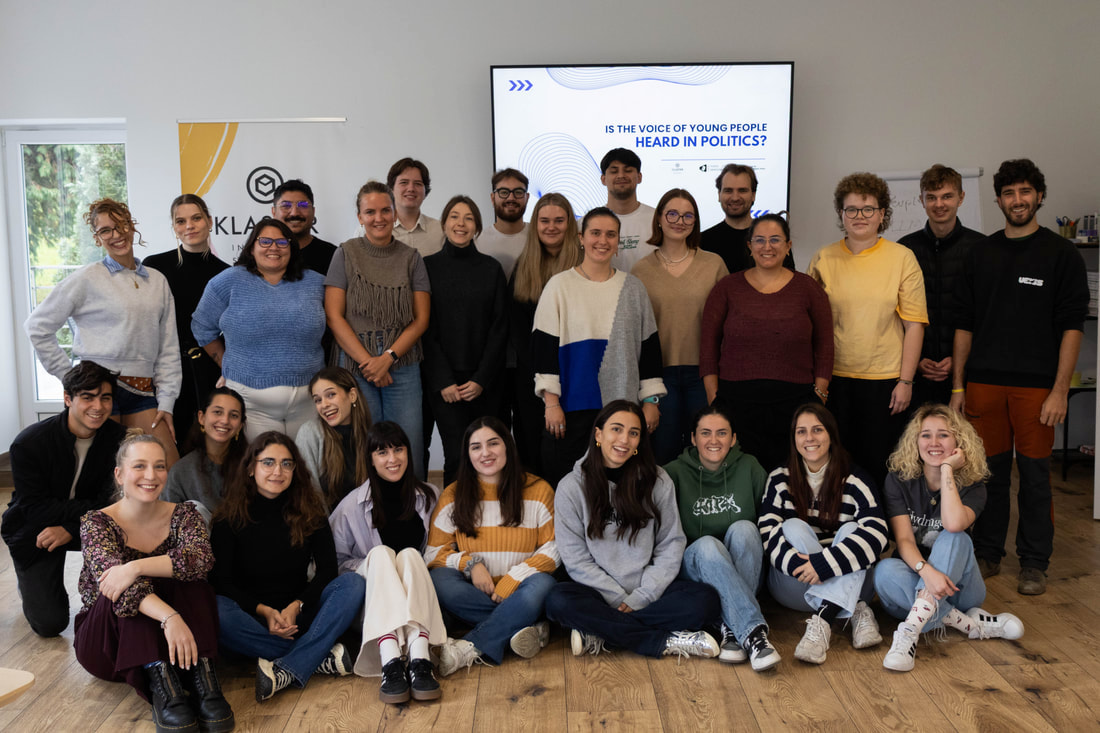
EU Horizon-funded project on youth civic engagement and democratic participation across Europe, completed in May 2026. Implemented through the Intersectionality Lab. Involves applied community research, co-production of knowledge with young people, and cross-country coordination.
↗ Project websiteA Horizon Europe project examining how collections-based educational approaches support sustainable development education across formal and non-formal learning contexts for children and youth.
Research project focused on psychosocial risks, occupational health, and protective factors among LGBTQIA+ populations in Portugal.
The stories behind the research, and reflections on work, health, and inclusion
The motivations, encounters, and unexpected turns that shaped each study — in the researcher’s own words.
I had been working in the LGBTQIA+ health space long enough to notice a pattern: whenever researchers discussed workplace experiences of LGBTQIA+ populations, trans women were either absent from the data, or present only as a footnote explaining why they had been excluded. "Hard-to-reach population." "Small sample." "Methodological limitations." What I read between the lines was something more uncomfortable: these were lives considered too inconvenient to study rigorously.
That is not a methodological problem. It is a theoretical and ethical one. So we went looking. We conducted in-depth interviews with trans women navigating the Portuguese labor market — and what we found was not what crisis narratives would predict. There was resilience, strategy, solidarity. And there was also exhaustion — the particular exhaustion of having to prove yourself at every step, in every role, to every colleague, repeatedly. One participant said something I have not forgotten: "You always have to prove yourself." She was not complaining. She was describing the structure of her working life with striking precision. That became the title.
This study came from something I lived before I studied it. When I arrived in Portugal to do my PhD, I spent months doing work far outside my field — the kind of work that any newly arrived immigrant without recognized credentials ends up doing while waiting for the institutional processes to catch up. I was a psychologist navigating a country that kept asking me to prove myself in ways that had little to do with competence and everything to do with where I was from.
I was surrounded by others in similar positions: overqualified, underpaid, and entirely dependent on one another for navigation, referrals, emotional support, and the practical knowledge that doesn't appear in any official guide. When I began thinking about who gets exposed to psychosocial risk at work and why, I kept coming back to that period. The title of the paper comes from something a participant said in an interview. It captures something the data confirmed consistently: what institutions fail to provide, people build for themselves.
Organizations display rainbow logos in June. HR departments introduce inclusion policies. DEI training is offered, certificates are issued, and reports are written. And yet — if you ask LGBTQIA+ employees whether any of this changes their actual working day, the answer is frequently: not much. The gap between institutional gesture and lived experience had been nagging at me for some time before I formalized it into a research question. I wanted to know whether the practices organizations claim to have correspond to what LGBTQIA+ employees actually perceive, feel, and live. What interested me most were the conditions under which the gap closes — what actually makes someone feel safe enough to be themselves at work. Those are the conditions worth understanding and building toward.
This space will host short essays and commentary on work, health, and the politics of inclusion.
Researcher · University of Beira Interior · Intersectionality Lab
Get in Touch
For research collaborations, talks, supervision, applied projects, or media inquiries related to occupational health, psychosocial risks, intersectionality, and LGBTQIA+ inclusion.
Affiliations
Department of Psychology and Education
Faculty of Social and Human Sciences · Covilhã, Portugal
European Research Center
Säffle, Sweden